Showing posts with label scrap-busting. Show all posts

Sunday, June 14, 2026

Weekend Review: Elevate Your Scrap Sewing Projects


Mount Joy, PA: Landauer Publishing, c2023 
215 p

A rather random reading choice today, but this is one I came across in my library and was pleasantly surprised by! It's a book of projects to use scraps, mostly quilting scraps, and the projects are mainly home decor and accessories, but there are some intriguing techniques that could also be adapted for garment details. 

The book is pretty to look at, and definitely scrappy; the author shares some new ideas with a modern, pretty aesthetic. The author is UK based, so there are lots of Liberty scraps in evidence here -- it's a pretty book to flip through! 

It starts out with an "About Me" to introduce the author a bit, then has a "Tools Tips Techniques" chapter which goes over quite a lot of the basics. It makes it easy for the beginner sewist to feel confident trying the projects. The projects themselves have a range of difficulties, and are shown clearly with lots of photos of process and finished project, and they have pretty good instructions. There is a mix of fabric manipulation and more straightforward quilting projects, as well as a couple of other styles of project. 

The 10 projects are: 

  • Basket Weave Cushion or mini Quilt
  • Pleated Bucket Bag
  • Summer Cushion 
  • Woven Cork Pouch
  • Rope Basket
  • Sallieann Flower Quilt
  • Japanese Origami Cushion
  • Heart Strings Pouch
  • Christmas Presents Mini Quilt 

There is a bit of repetition -- for example, the fabric pleated bag and cushion use the same techniques, so there is duplication in the instructions. This was the technique I was most interested in though, and the most unusual for me, so I was happy to have two examples to study. 

I liked this one, and it gave me some ideas, always a good thing in a new craft book. It's quite charming and I think the projects are modern enough to appeal widely. You can get a flip through of the whole book with the author in the video below, if you are interested! 


Sunday, November 23, 2025

Weekend Review: Fabric Leftovers


Fabric Leftovers / D'Arcy-Jean Milne
Lafayette, CA: C&T, c2006.
96 p.

This is a fun little book I picked up at a thrift shop recently. I'm always looking for new ideas for scrap busting and this looked like there might be some unique projects to try out. 

I liked it, even if some of the 2006 projects are now out of date (ie: cd cover). It's an interesting combination of techniques and projects, and you might be able to adapt some of the techniques to projects of your own that you want to create. 

It starts out with a brief look at organizing and storing scraps for ease of use, some recommended threads and stitches, and a really useful 'processing' overview on how to best cut up ties, sleeves and jeans to get the optimal fabric use out of them. 

She then moves on to techniques: there are 6 covered, two kinds of fabric creation (patchwork and weaving), cording, couching, ruching, stuffed tubes she calls 'beads', and a way to make buttons into decorative blooms. I've seen some of these kinds of things before, but the weaving (into rug hook canvas) in particular was a new idea for me. I can see how these techniques could be adapted into personal projects.

The book then shares 15 projects. There are sculptural things like boxes or folios, some journal and cd covers, bags, wallets, frames, fabric flowers, and little things like stuffed 'candies' and tassels. Some of these I liked and some I had no interest in, but there was a nice variety so readers should be able to find at least one they might like to try. 

I liked the set-up of the book. It was well organized, with lots of large, colourful images of everything discussed. Some of the content may be a little dated now, but the overall techniques and concepts are still valid and useful. I can see how many of them could easily be updated to something contemporary, especially with the renewed interest in patchwork and garment making. A fun discovery! 

Sunday, November 16, 2025

Weekend Review: Sewing With Scraps


Sewing with Scraps / Birgitta Helmersson & Sam Grose
Quadrille, c2025.
192 p. 


I picked this one up as I'm a fan of both using up scraps and of Birgitta Helmersson's earlier work with zero waste patterns. I have to admit I didn't expect there to be so much quilting involved, but there are also other options included! 

There are 15 projects, and the book includes 3 downloadable pdf patterns for unisex designs, in sizes UK 6-30. They do include some more expected smaller projects as well, but the focus isn't on tiny accessories to use up little scraps, it's more combining those midsize chunks of odd sized garment leftovers into (mostly) new garments. There are images of some of the photos and the book's interior at Helmersson's website if you'd like a preview. 

The book is not entirely project based, however. They arrange it by technique, so there are ideas and instruction for patchwork & quilting, then strips, then collage/applique. These techniques could then be used in any way you see fit, really, for any of the projects in the book or any that you tackle on your own. They want the reader to learn new skills that can then be carried forward creatively. 

The 'strips' technique was newest to me; I've seen bias strips used before but this technique uses regular fabric strips that are sewn to a garment, down the middle so that they slightly gather and the edges can fray with use. ie: on this Swirl Shirt. She also talks about bias strips, as well, though.


It's an interesting read that offers some new ideas, with a youthful, contemporary aesthetic. If you like the concept of upcycling, recycling, or sustainable sewing, you might want to check this one out. 

Tuesday, October 7, 2025

Scrunchie Time!

I have been spending quite a bit of time recently preparing scrunchies! I don't have the hair for them, but these are being made for an 80s themed program I'm doing at work. I thought I'd use up some of my scraps but went a bit nuts with it! 

This was my process -- long tube with one end folded in, turned and pressed, add an 8" elastic and tuck one end into the other and sew over the opening. My technique was based on this video. There are more elegant ways to do this but this was definitely the quickest way to get mostly done tubes for people to make scrunchies from in a short time. 


And I'm talking a lot of scrunchies! I ended up making 60 of them, and used up about 2 metres worth of scraps! I had some quilting cottons, some rayons and velours, some bits of dressmaking scrap and so on. Kind of fun! 


This is the pile finished and ready to go. I was lucky recently to find a big reel of narrow elastic at the thrift store and I can barely tell that I've cut 60 lengths already. Kind of fun to be able to make these for our craft night which will also feature pinback buttons, friendship pins and of course a great 80s playlist! Definitely the most fun I've had using up scraps for a while. 


Friday, September 19, 2025

Fabric Tape: a quick stashbuster

I saw someone online talking about making fabric tape -- it looked super easy and since I've just been sorting my fabric stash, I knew I had a lot of lightweight cotton scraps, tiny ones that are hard to use up. This seemed like the perfect project. 

Random cotton trimmings


It really is simple. You buy yourself some double-sided tape (I found mine in a dollar store in the craft section), iron your fabric well, peel off one side of the tape and stick it down, then trim neatly around your tape. You can make any size you want, but I stuck with small lengths that I can use to tape down corners of notes, decorate my journal and so on. 


This was a fun activity that didn't take much time, used a few of the small scraps I had that were too pretty to throw away, and has provided some nice material for my stationery collection (my other passion). Win win for me. 


Sunday, June 4, 2023

Weekend Review: Quilt Talk


Quilt Talk / Sam Hunter
Lafayette, CA: Stash Books, c2014.
144 p.

As many of you already know, I am a sewist but also a librarian. I love seeing sewn text! Lately I've come across a rash of books on adding text to quilts, using varied techniques. This is the first one I'll share this month. 

I picked this up thanks to my library, and have been really entertained by it! It includes 12 projects, but the projects are not all full quilts; as shown on the cover, she has small projects with just a few letters so you can get started without too high a level of intimdation! 

This book is focused on paper piecing - there is a big section at the end with all the patterns to copy for all the letters. The book opens with a guide to paper piecing, if you've never done it before this will be particularly useful. You sew bits of fabric onto your paper foundation backwards to get the letter shape -- I've never done paper piecing and must admit that the process looks quite complicated to me, even though she's created a process that doesn't require specialized tools. There are also a couple of charts full of math and measurements in order for you to size the letters up and down, and adjust the kerning as needed (the spacing between letters & words). There is a full alphabet included, both upper and lower case, plus accents, and a row of special characters you might be most likely to need. If you're into this kind of text making this book will be a great resource.

It's a bright and cheery book, with many of the colour choices bright and modern. The photography is clear and plentiful, so that it's fun just to look through this book for inspiration. There are a variety of projects and each one has the instructions for the lettering, but also how to make the project itself (like the little bucket bags on the cover). Projects range from baby quilts to full size quilts, from wallhangings to house decor. So you could do any project as is, or just use the lettering guide, or even just the bigger project without lettering. Lots of options here. You can find out more about it on the author's website if you're interested, and of course could get a copy at your local library to check out the techniques if you're also wondering about the possibilities of sewn text. 


Tuesday, February 21, 2023

Red Remnant Skirt


I have been trying to use up my stash as much as possible in my recent sewing. And after I finished the red ponte dress for the Sewing Bee, I found I still had just over a metre of this fabric left. I didn't want to put it back into the stash to languish, so I decided to make a basic knit skirt to use most of it up. 

I chose New Look 6977, as I've made it previously and have worn it quite a bit. I like a good pull-on skirt that you can feel comfy in! I made it with the same addition as the last time I made it -- I added side seam pockets. I used some black broadcloth, and anchored the pocket bags into the waist seam. This time I followed the pattern and just inserted a thinner piece of elastic into the wide waistband rather than stitching one down; that just makes it easier to alter in future. 

I really like the fit of this skirt. It sits comfortably and securely at the waist, but also skims over the hip/butt area fairly well. This fabric is soft and stretchy, and it's a colour that goes with a lot that I have in my wardrobe. I was pleased with the way this went together without much struggle, and now I have one less piece of remnant knit in my stash, and one more useful basic skirt in the closet. This wardrobe pattern has a lot of good options, and I do recommend it if you can find it. 

Wednesday, February 8, 2023

Yanaka Jacket in Scrappy Remnants

I've been wanting to make a Yanaka jacket for a while! I love the silhouette and the relaxed design; cropped or shorter jackets usually look best on me so I knew I'd have to make this one. I considered making a quilted jacket, but realized that a simpler print mixing version would suit me better. This project was made for the Liesl & Co. Ambassador Circle but was also inspired by the PatternReview Print Mixing Contest that ran in January (and if you're a PR Member, you can still pop over and vote for my jacket until Feb 10 if you'd like!) It will be shared on the Liesl & Co blog shortly as well!


This is an ideal pattern for print mixing or colour blocking, as there is a centre back seam, sleeve gussets and facings that can show if you fold the collar down. Lots of opportunity to use smaller pieces and show off those pretty leftover bits. And I have lots of pretty leftover bits! I use a lot of cottons and linens in my sewing so I got out my scrap bins and pulled out some of the larger remnants. I trialled a bunch of different combinations but finally decided on five floral prints that all fall within the same colour tones and scale. One of the prints (on the sleeve gusset) was just a cotton from my stash, but the other four prints werer remnants from other projects -- Butterick 6725, Butterick 6655 , the Itch to Stitch Celeste, and the Sew Different Harmon Top


I came up with a placement plan, but these fabrics were all fairly light/fluid. The Yanaka pattern recommends a medium to heavier weight fabric to support its shape, so I interfaced all the pieces with a medium weight fusible interfacing before starting construction. I knew that the standing collar, the front points and that wee back notch needed to be sharp, not floppy. Interfacing them prior to construction allowed me to use these particular scraps.


I didn't make many changes to the actual pattern. But there were a couple. I shortened the sleeves, actually by a little too much. In the end I didn't want to take any length out with a wide hem, so I made a 2" wide sleeve facing out of the cotton I used for the sleeve gussets (these were non-interfaced) and hemmed the sleeves that way. This also gave me a clear surface to stitch the lining on. I've added back some of the length to the sleeve pattern so I don't make this mistake again.


And I did also make a lining for this -- the jacket pattern is unlined, but with all my interfaced innards I wanted it all covered up nicely. Because of this I finished all my seams with a quick pass of the pinking shears since they'd end up invisible anyway.  I added in a 1/2" centre back pleat to give more movement room, and the lining was also a scrap!


The most notable change I DIDN'T make was that I did not shorten the body of the jacket at all. I almost always shorten above the waist but this time I liked the finished length and didn't want this to be too cropped, so left it as drafted. I really like how it turned out! It's really comfortable and the fit is great. I love the chance this pattern offered to use some of my beautiful print scraps to make a one-of-a-kind jacket. The lines of the design are just made for it!

Tuesday, May 24, 2022

Novelty Scrap Busting!

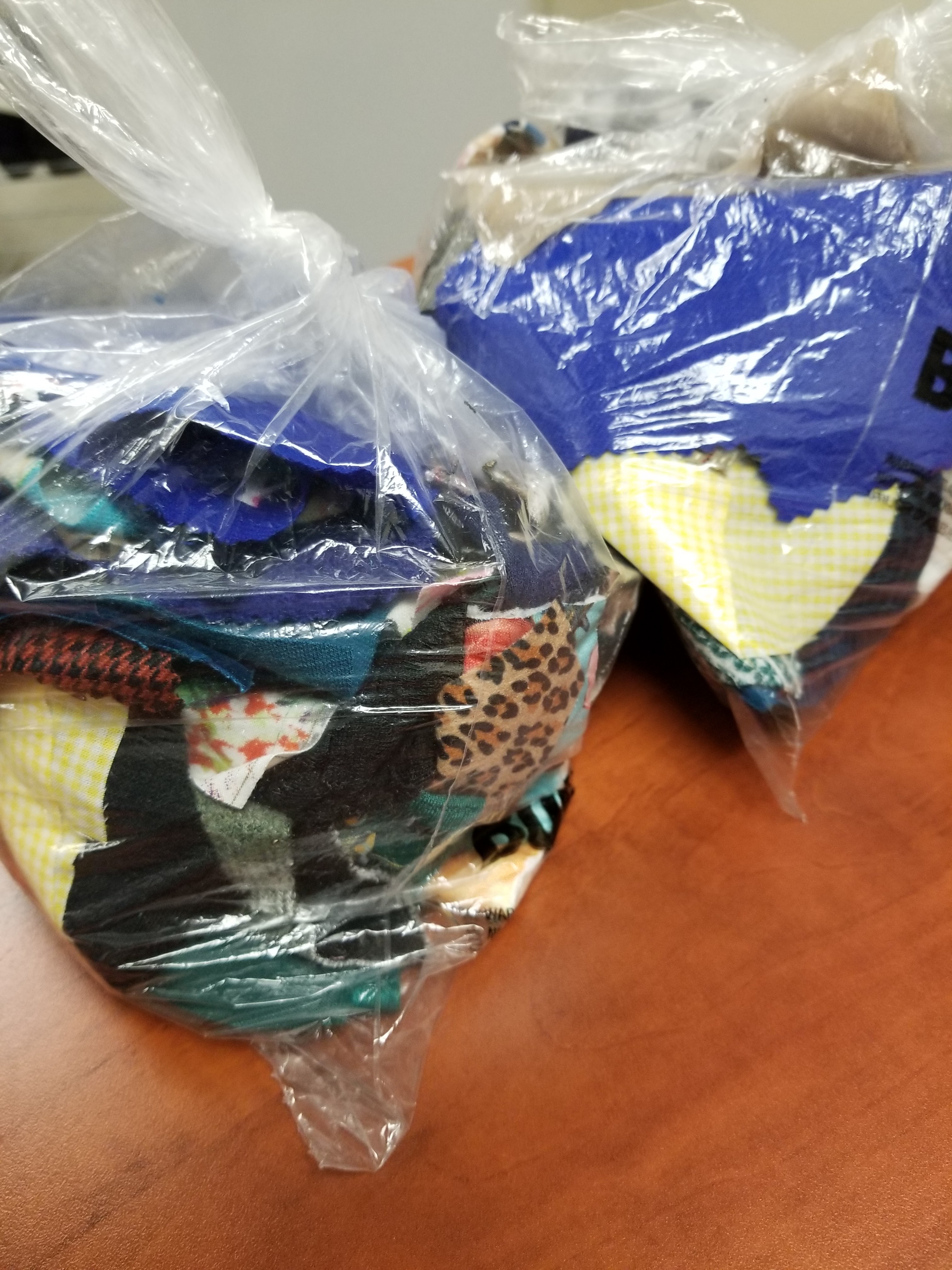
I have a tip for all you scrap busters out there -- check with your local library and/or early education teachers to see if they have a use for your scraps. My coworker who runs children's programs recently asked me if I had any fabric scraps with varied textures for a learning module she's creating. The key was texture -- the children would be feeling the fabric and sharing their experiences, even comparing it to things outdoors during outdoor programs as well. 

Well. Do I have any scraps? This request took on a fun journey through my remnant bins, where I found lots of silky lining and rayons, crisp cottons, canvas, rougher linens, varied wales of corduroy, velour, burnout velvet, fleece, felt, wool, jacquards, cotton gauze, seersucker, scuba, soft stretchy jerseys, metallic knits, suitings, ultrasuede, and more. I cut a block of each one, in varying sizes depending on my remnant, but big enough to run through the hands and get a good sense of the tactile nature of each. 

I used my pinking sheers to trim some of the more prone-to-fraying bits, but overall they weren't hard to gather and sort. And they can be thrown into a lingerie bag to be washed when necessary. If there are some that fray away she can ask me for more ;) 

It was a fun exercise, as I saw bits from my many previous projects, and even discovered quite large remnants of a few fabrics that I'm now planning to make some summer tops from! I was able to create two baggies of exactly the same bits so that they can be used by multiple families. This was an unexpected request that cleared nearly a shopping bag full of small scraps from my stashes and got me to organize a bit too. Definitely a new and useful life for some of my remnants.


Friday, March 4, 2022

Liesl & Co Advisor Circle Project One!


I announced earlier on that I'm a part of the Liesl & Co Advisors Circle for the year -- well, I've done my first project for their blog! You can find the post here.


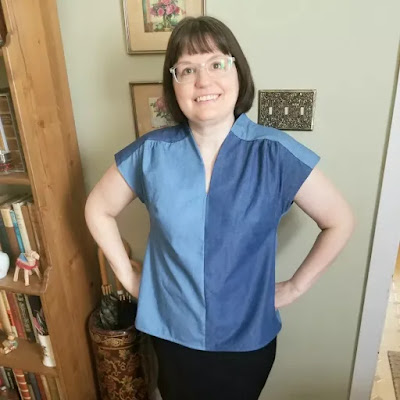
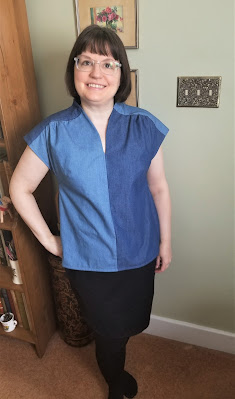
The idea for these projects is to take one or more of Liesl's patterns and adapt it in some way, or show another way to fabricate it. This time around the challenge was colour blocking. I had bought the Fira top when it was first released, and thought that this pattern would be a great option for colour blocking. Fortunately, Dyann from the Advisors Circle thought the same, so we did a joint post showing our versions.

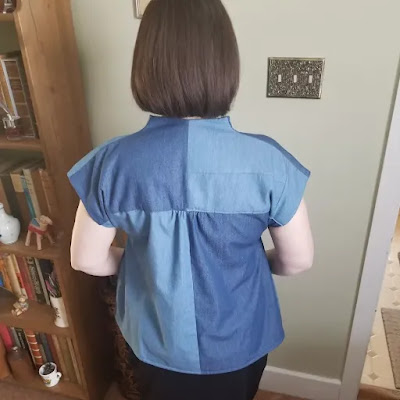
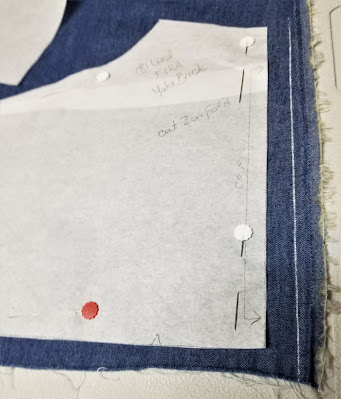
For mine, I divided up the original front pattern piece into two, remembering to add a seam allowance to the new centre front seam (I used 1/2" for ease of measuring). The front yokes are already separate, so I only had to divide the back yoke into two rather than cutting on a fold as well. The back of the top already has a centre seam so no problems there! 


I used some denim scraps from an earlier dress, which coincidentally happened to be Butterick 6567, a Lisette dress, one of the patterns that Liesl designed for Butterick in the past. That wasn't planned! But I had a fair bit of these lightweight denims and thought that the low contrast would be visually pleasing; I had used the contrast in the dress and liked it. 

The hardest thing about this top was just making sure I cut the pieces in the right orientation, so that I'd have the correct pattern of colours to put together. With such limited fabric, I measured more than twice before cutting once ;) 


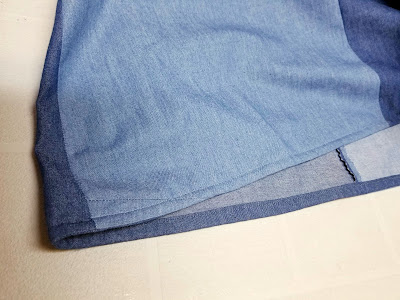
I used the darker fabric for the inner yoke since I had quite a bit more of that, and ended up using a strip of it as a hem facing as well, since I had to shorten the pattern quite a bit to fit onto my fabric. Thankfully I'm so short that it still worked, as long as I didn't turn up much of a hem, so 1/4" seam hem facing it was. 


This was a real puzzle to work on. Since I was quite low on larger pieces of the paler blue denim, I had to piece together remnants to get chunks large enough to cut the back yoke from and ended up having to also piece little corners of the front yoke and the lower back edge as well. Fortunately piecing looks great in denim, and also goes with the scrappy colour blocking feel, I think. 

I'm really happy with the top and found it a fun challenge to make. Aside from having to give it a press every time I want to wear it, it's great ;) The pattern itself is pretty simple, although the yoke construction can be a bit of a stumper for a minute. The inner yoke is sewn together with the body, then it's flipped to the outside and topstitched down on the outside. This isn't a way I've done a yoke before, so I had to think about it and play with my fabric a bit to get the hang of it. But I think it was worth it -- a fun top and one that used up some really nice remnant pieces. A win!


Sunday, December 19, 2021

Weekend Review: The Art of Mixing Textiles in Quilts

The Art of Mixing Textiles in Quilts / Lynn Schmitt
Lafayette, CA: C&T, c2018
111 p.


 Another quilting book this week, full of beautiful images and inspiration. I picked up this one because I'm interested in the idea of mixing textiles in projects -- I am certainly not a quilting cotton purist, especially since I sew with so many different fabrics, and want to be able to scrap bust all of them! 

This book is a great resource. The first section talks about the different non-quilting cotton fabrics that the author uses, like wool, silks, linen, or upholstery fabrics, among others. She goes over the best ways to use and combine these fabrics -- tips on seam pressing, stitching, interfacing/stabilizing, and so on. One good example of a basic tip is when sewing heavier fabrics like wool or upholstery weights, don't press the seams to one side. Press open to reduce bulk, and you can also grade seams. This is something garment sewists will probably know but it's a great tip for someone new to incorporating these fabrics.

I'm mostly interested in this topic because it seems to me that this book has lots of great ideas that can be used in garment sewing, especially these days as patchworked and quilted clothing is becoming a little more popular once again. And I feel like there is a lot of useful content here. Plus beautiful images, did I mention that already? 

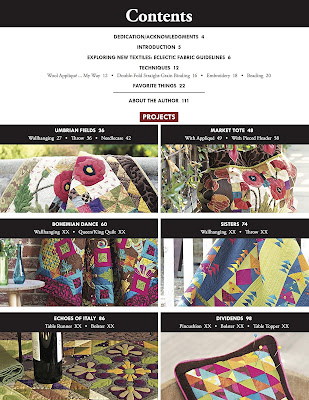
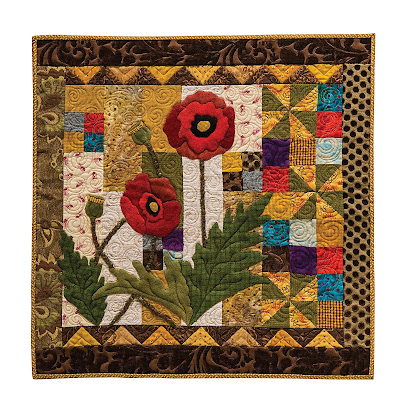
Her style of eclectic piecing as she calls it is really eye-catching, as is shown off with 14 projects here -- pillows, quilts and small projects which feature piecing, applique and some wonderful quilting designs too. One piece that uses both traditional blocks and more modern design is this beautiful little wall hanging. I love the combo of colours, techniques, and the overall finish.

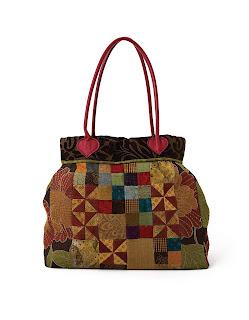
There are also practical or useful projects included and this "Market Tote" is one example. It uses the same mix of traditional blocks and more general piecing as the wall hanging, and on the other side of it there is actually some applique as well. It's a great use for the sturdier fabrics that she uses in the mix.
I also admire some of the quilting on these pieces. The wall hanging has a spiral motif that contrasts with the square blocks, and there is one piece, shown on the cover, with a circular medallion quilted onto an area of green silk, right among the flying geese blocks, and it's really stunning. The shape of it and the way it catches the light are both very pleasing to the eye. There are many little details in these projects that are very inspiring. 

I really enjoyed going through this book. Other projects include table runners, pincushions, pillows & throws, and while I might not be planning on making many of them they were a delight to look at. The initial section of information on textile use is the most applicable to my sewing habits, and I think her experience and advice would be useful to anyone wanting to blend fabrics in a pieced/quilted garment. If this kind of stitching appeals to you, I'd recommend checking your library to see if you can take a look at this book too.  

Sunday, December 12, 2021

Weekend Review: Making Scrap Quilts To Use it Up

Making Scrap Quilts to Use It Up! / Lynne Edwards
Newton Abbot, Devon: David & Charles, c2003
128 p.

One of the ways to sew more sustainably is to make sure you're using as much of your fabric as possible, and wasting very little of it. Making quilts has always been a traditional way of doing this. However, I'm not really a quilter, well, not a traditional one anyhow. So I don't end up using a lot of my scraps in this way. 

But, I recently saw a book review on PatternReview for this book, Making Scrap Quilts to Use It Up by Lynne Edwards. The reviewer mentioned that along with quilts this book includes two other small projects, in particular, a bag that she was interested in.

It sounded so intriguing that I quickly requested this book on Interlibrary Loan and have had a chance to read through it over the last week or so. It is a good collection, with a variety of quilts (16 patterns) using small pieces, arranged either randomly or in set quilt patterns that give great visual effects. There are good photos and clear diagrams and instructions for the projects as well. 

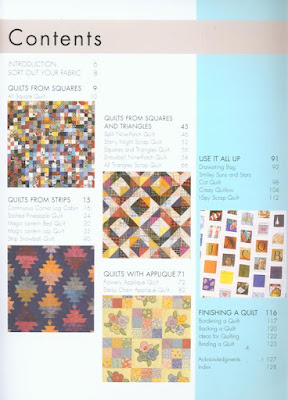
One of my favourite kind of quilts is the random scrap style, and the first one in this book is a massive postage stamp quilt -- all made of 1.5" squares. It's really appealing, the kind of scrap celebration I love. There is also a quillow pattern, I recall making a bunch of these for Christmas gifts many years ago! 


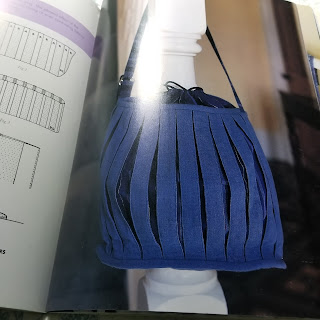
But as I am mainly a garment sewist, I have to agree with the original reviewer that the highlight of this book is the very unusual bag pattern. It's a pleated bucket bag style, with an interior drawstring closure. I haven't seen a style like this before, and there are examples both in solid fabric and in patchworked fabrics. I don't make many bags but this is such an interesting design that I'm eager to give it a try. 


This book is out of print as far as I can tell, so you'll have to find it second hand or via your own local library if you are interested in investigating it as well. 

Sunday, December 5, 2021

Weekend Review: Sew Sustainably by Wendy Ward


How to Sew Sustainably / Wendy Ward
London : CICO Books, 2021.
160 p.

Carrying on from last week's book list of reading on sustainable sewing, here's a must read if you're interested in this topic! Wendy Ward has written a handful of other sewing books, all well done, and runs a pattern company as well (MIY Collection). She really has a specific style, and it's clearly on show in this book.

So this particular title is about using up all the smaller bits of fabric we all have left after sewing, as well as trying to reduce those leftovers through low waste cutting. There are no pattern sheets in this book; everything is done via measurement, like many zero waste patterns out there. And this book isn't limited to clothing ideas, either -- there are directions for art pieces too and accessories like bags and scarves too.


The cover image is a good example of the chapter on piecing; how to put together scraps into another appealing garment. (One that I really like here, shown on the back cover above -- lengthening a dress by inserting a strip of pieced fabric in coordinating colours. So cool!) This is definitely a great idea if this aesthetic matches yours. Some people will love it, others won't find it jumps on to their to-do list. There are a couple of designs for new or larger pieces of fabric, including a huge batwing style tunic/dress and a dropped crotch pair of pants. Like we're talking knee level or lower crotch. So it's definitely cool and unique, but not something I myself might make. But reading through the concepts does start to make you think a bit more about the fabrics you have and how to use them. 

I liked the idea of including fabric scrap art projects -- some were wall art, some notecards or pieces to applique to a garment. There were a couple of techniques shown, and this might be a way readers could experiment with scraps to see if they like the process and results. I think this kind of freeform scrap use is rather fun! 


As in all of her books there is a good strong section on basic techniques. If someone who doesn't really sew much or is just learning picks up this book, they'll have enough to get started right away. And there is also a section at the end of the book on refashioning and "aftercare" -- mending and caring for garments. 

Well planned out, great photographs, unusual projects -- if you like this scrappy, edgy aesthetic, you'll like this one. Even if you don't there are some interesting ideas and techniques shared, so I am glad I read it even if most of the projects are not for me personally. I think it would really appeal to a certain kind of sewist though -- if you know someone who likes to experiment and freeform their sewing and is also concerned with sustainability, this might be a hit. 


Wednesday, November 24, 2021

Leftover Letters to Infinity

After I cut my Mandy Boat Tee from my letter print fabric last week, I had a wide strip left over along the bottom. Plus a half width chunk that was left from the section where the sleeves were cut. I was able to join those two half strips and then use the two pieces together, so I wouldn't waste anything from this amazing fabric. 

I decided that because the leftover bits were so wide (around 8" deep) I'd make an infinity scarf. I can wear it with the original top, or to jazz up other outfits. I used the same procedure as my last set of infinity scarves way back in 2016. This is a super quick project to use up leftover knits, and I wear scarves a lot so it's perfect for me.

Also, I hate wasting fabric, especially when I really love it! Now I have just a couple of odd shaped scraps of a few inches left, much more satisfying :) 

This is also a great last-minute gift project, as it doesn't require a lot of fabric or precision sewing either. If you have bits of knit in your stash and are in need of a quick gift, give it a go. 


Sunday, December 20, 2020

Weekend Review: Half Yard Heaven


Half Yard Heaven / Debbie Shore
Tunbridge Wells, UK: Search Press, c2014
96 p.
If, like most sewists, you have scraps and scraps and scraps in your sewing room, this book gives some fun idea of tiny projects that can use some of those up! While it's intended mostly for quilting cotton scraps, dressmaking fabrics can certainly be used as well...you might even use up some interfacing scraps while reinforcing some of those lighter weight fabrics to use them in these projects. 

The book is laid out very attractively, with 26 projects to choose from. Instructions for each are clearly written, step by step, including a list of required materials at the beginning of each project. There are many clear photos for many of the steps, as well as a picture of the finished item, so you can get a good idea if the project is for you, as well as how involved it is. 

Just a few of the variety of projects included.
 I have my eye on that hanger organizer...

I found some of the projects a bit twee, and not something I might personally make (tissue box cover??) but most of them seem useful and practical - from aprons to slippers to oven mitts, to household items like padded hangers, book covers and a cute chicken doorstop, there is likely to be something interesting for most readers. 

Obviously I found this one interesting!

The projects are mainly made up in sweet quilting prints, lots of florals and pastel bright colours. However, changing that fabric to something more your tastes could totally change the look of the project -- I'm imagining some plaid or darker toned fabrics for a tote bag or neck cushion for a less girly feel, for one thing. 

I think it has some fun ideas to use up those leftover bits, although nothing too unusual is included, there are some solid projects and some great for beginners too. Quite a good book, and apparently just one in a series though I haven't seen any of the others -- this is the only one in my library system! 

Worth a look, I think, especially if you're thinking about clearing out your scrap stash in the new year.