Showing posts with label pattern books. Show all posts

Sunday, May 3, 2026

Weekend Review: Garden of Stitches


Garden of Stitches / Mary Engelbreit
Kansas City, MO: Andrews McMeel, c2026.
160 p.

I am featuring some enjoyable new embroidery books this month, beginning with one by the fabulous Mary Engelbreit. I found this one thanks to the library system, and loved it. Of course, I've always liked Mary Engelbreit's style, which helps: this book is so her! 

It's a series of embroidery projects, floral themed for the most part. You know I was going to love the one on the cover! There are 30 projects, starting with pretty simple ones and moving forward in difficulty as you go through the book. The final patterns include her distinctive lettering, and I think it works really well in stitch. 

Each design has a pattern and a guide to the colours and stitches used for each element. There are a lot of line stitches, which are great for beginners, with not too much difficulty and a nice result. She also introduces the idea of shading some of the shapes on the embroidery with fabric markers before stitching, as seen on the cover image. This cuts down on full coverage embroidery while giving more depth to the images. It's a great idea that I think artistic people will enjoy, especially if they are new to embroidery and want to make a quick project. Also, this isn't just hoop art. There are examples of stitching onto jackets, hats, or pillows, for inspiration on how to use these designs (or parts of them) in your own way.


As noted, I got this one through the library, but I need to get myself a copy as there wasn't enough time to try some of these cool projects! It's a cheerful, colourful collection by an artist I admire for her art style and for herself too. Looking forward to owning this one. 


Sunday, April 19, 2026

Weekend Review: Skirt A Day Sewing

Skirt-a-Day Sewing / Nicole Smith 


This is a bit of an older book but I found it in the library! It's an interesting concept and would be a fun one to work through bit by bit. 

The author sets it up with some basic sewing info, then spends time showing you how to draft a custom pattern for yourself, so that you can start altering your skirt block into the 28 designs she's created for this book. 

After that beginning (including the nearly 40 page chapter on drafting, which includes many illustrations to help you out), the book has four further chapters, each taking on one style of skirt, then expanding it into a full week of patterns that you can adapt from the basic design, using your own block. 

The four chapters focus on Wrap Skirts, Straight Skirts, Flared Skirts, and High-Waisted Skirts. The cover image shows off a few of the variety of options included. I like the idea of this book, and think that by creating your block and then taking on some drafting challenges to make some of the variations shared, you could really learn a lot. She is good at explaining things and makes it sound quite achieveable. There are photos of each skirt, and lots of diagrams and clear instructions for every variation, too. 

The skirts show variety and how to change up a plain pattern to incorporate a range of features. Of course you're probably not going to like all of them -- many just aren't my style, but I still read about how they were made from the original pattern. That info was fascinating. And it gives you some knowledge about tweaks you can make to patterns you already own, to add in or adjust features (like pockets, pleats, gores, waistbands, ruffles, etc) that you'd like to have in your garments. If you like skirts, this would be a great book to check out! 


Sunday, April 12, 2026

Weekend Review: Matchy Matchy

The Matchy Matchy Sewing Book / Amy Gonzales & Theresa Kuo


This is a newer sewing book (just published in Dec 2025) and I had a lot of fun going through it. Matchy Matchy Sewing Club is a pattern company that has a very strong aesthetic -- patchwork clothing, lots of volume and airy makes overall. I tested one of their top patterns, the Skipper, a while back, and was looking forward to checking out this book. 

It's a bit short, but even with that, there are 12 new patterns included (9 garments and 3 accessories). Lots of huge, bright photos of all the projects, instructions with illustrations, and a great opening to the book that includes basics of sewing, including terminology and tools, for those brand new to sewing, which may be a lot of their market. I thought it was really well done. 

The patterns can all be found via a QR code in the beginning of the book. If you go to that page, you can download any of the included patterns which interest you. I found 3 of particular interest, even I will likely tone down the patchwork vibe on mine as I'm not a gingham fan and don't have any scraps of it since I don't use it. But these patterns are perfect for scrap busting, as they are designed to be made up of many panels so you can interpret that however you like :) 

This is a sweet book that will likely appeal to many of the young sewists new to the sewing world. It fits in with the youthful style currently popular, and is very accessible for new sewists. I think they did a great job with it. 


Sunday, November 9, 2025

Weekend Review: Reclaimed Quilts

Reclaimed Quilts / Kathleen McVeigh & Dale Donaldson
Cpncord, CA: Stash Books, c2024.
128 p.

This was a fun one also found on Hoopla! It's written by a couple who own the sustainable clothing brand Kitty Badhands. They are based in Vermont and definitely have a bit of a hipster vibe. 

This book was a lot of fun to look through, even if I might not be able to carry off some of these extreme quilted looks myself. Their focus is to upcycle damaged textiles, mainly quilts and quilt tops, to make into garments. I have to say, my favourite piece in the book is the dress front and centre on the cover, but that's my taste -- you might find something else here that speaks to you. 

This one is really about reusing existing quilts (and little projects to use up the scraps) not so much quilting your own yardage. So you have to want to go all in on the quilt look! The book includes instructions on how to find, clean and care for vintage textiles (and talks about when you should probably NOT cut up a quilt), as well as including basic and specialty construction tips for quilted fabrics, such as seam finishes, binding, pockets and so on.  

There are 8 garment patterns and then a few smaller things like totes and pouches, ways to use the leftovers once you've cut out your garment pieces. I think it's a nice way to lay it out, with inspiration and practical guidance side-by-side. Also the sustainability piece is there at all times. 

There are many photos, mainly of the authors and some of their fellow young hipster friends, all modelling the various pieces. As I noted, not all of these items are to my own personal taste, but I might make a couple of them, like the dress or tote, if I had the right textile. In any case, those who do have an interest in this aesthetic will find this a cheerful, helpful book. I enjoyed it even if I don't end up making anything from it. So colourful and cheerful to look through.


Sunday, November 2, 2025

Weekend Review: Sewing Quilted Patchwork Jackets

Sewing Quilted Patchwork Jackets / Rae Cumbie & Carrie Emerson
Mount Joy, PA: Landauer, c2024.
184 p.

I have been reading and enjoying the book over the last week or two, after having checked it out from my library. This might be one of those library books that I'm now going to have to buy for myself. Lots of good info in it! 

It's all about, obviously, quilted patchwork jackets. The subtitle is "Four approaches, Ten Distinctive Designs, Two Downloadable Patterns". This is slightly misleading, as the book is based on the Opus Coat pattern by Fit for Art, and the two patterns are the adult and children's sizes -- available for download but also included in the back of the book as photocopiable patterns. There are four approaches though: whole cloth, patchworked, collaged, or reworking an existing quilt. And there are 10 different projects here, which can look very distinct from one another thanks to small details, aside from fabric choices of course.

The pattern has options for a front band closure, a collar, or even a vest version (all shown on the front). You can adjust those to create a wide contrast front band, extend the jacket into a duster, add applique, pockets or linings, and choose from buttonholes, button loops or snaps as a closure. Lots of variety shown thanks to the many projects included. 

I was intrigued by a couple of the projects in particular, but each one is well thought out and has clear images and instructions. I really appreciated that there are tips throughout for garment sewists who aren't quilters, but also for quilters who aren't garment sewists, about the particular differences that each might need to be aware of. 

It starts with sewing tips, ideas for design, and construction and finishing steps to be aware of. Then it moves into the projects, each of which has large photos for each step and lots of instruction. Like I mentioned earlier, there is a nice variety in the finished projects -- she uses different colourways to show how the jacket can look quite distinct, from jewel tones to Morris prints to denim and orphan quilt blocks. They all give quite a different vibe. 

I think this is a great resource for anyone interested in making a trendy quilted coat from scratch; there is only one (the duster coat) that uses a premade quilt. Well organized, lots of inspiring images and tons of practical information. I was impressed.  


Sunday, January 19, 2025

Weekend Review: Clone Your Clothes

Clone Your Clothes / Claire-Louise Hardie
Exeter, UK: David & Charles, c2024.
128 p.

This is a lovely book by well known UK sewist Claire-Louise Hardie. It really lives up to what it promises - showing you how to clone your favourite clothes, without having to take them apart. Hardie also maintains an active blog, The Thrifty Stitcher, and her level of writing, communication and teaching experience makes this a very approachable, useful book. (and her blog is also great, do check it out).

The book is well laid out, progressing from simple to more complex techniques and ideas. The purpose is to help a sewist figure out how to copy a piece of existing clothing, but there are different ways to do this. She starts out with basic tips on analyzing your piece, deciding on fabric and construction order, and then choosing a technique -- whether that's Direct Measuring, Tracing, or Overshaping. Then she guides you through making your pattern (and at this point being able to add any adjustments in order to make your new version perfect) and making a muslin to test out your new pattern. 


It's very nicely laid out, and there are bright and clear photos to illustrate many of the steps, as well as some more inspirational photos. After part 1, the basics, part 2 is a series of 5 projects -- a capsule wardrobe -- where she takes you step by step through a type of garment to show how to get your own pattern from it. She covers a cami, wrap skirt, shirt, simple trousers, and a tea dress, all things you can select according to your own style and follow the instructions to copy and make up for yourself. 


The end of the book includes some extra resources like a cloning worksheet to follow along with and some other info you might need. After reading this book I think sewists will feel much more confident in this area and might just start cloning some old RTW that has seen better days. I haven't actually tried it yet myself, just short on time, but I'm really intrigued by it, and I felt like this book was a helpful guide. I appreciate the clear instructions and the multiple illustrations, and think anyone interested in this concept would enjoy this book. 

(more images and info can be found on the publisher's page fyi)
 

Sunday, January 12, 2025

Weekend Review: Made to Measure


Made to Measure / Elisalex Jewell 
Beverly, MA: Quarto, c2023.
176 p.

I was recently able to find myself a copy of this book by Elisalex Jewell, who also runs By Hand London - a well established pattern company. I was interested in this one because it does not include "patterns", rather it's a look at drafting your own simple patterns using your own measurements. I appreciated that this idea was carried through to the samples and photos, using models of various sizes and shapes to demonstrate the idea well. 

The concept of this book is to empower sewists to make their own outfits based on their measurements from the beginning rather than altering a purchased pattern. However, the book does begin with some tips on fitting issues and solutions, in case the drafts need some tweaking. I'd rate this as a book for the advanced beginner, or a fearless beginner, looking to improve or widen their range of skills. I would call myself an intermediate sewist, and I think there are great ideas in here that I haven't tried yet. 

It starts with an intro to basic tools, fabrics and techniques. Then it moves on to fitting tips, including a layout about shoulder slope which I think is so important to fit and doesn't often get mentioned. This section is practical and condensed but I think of great use to a newer sewist. There are also tips on hacks to basic designs (ie: sleeves) and a guide to taking your measurements. And in this section she also includes a circle skirt calculator & instructions for a quick make. 

The rest of the book is the 16 patternless projects. These are made up of plenty of dresses and skirts, but also include a top and a couple of jumpsuits. Each features at least one photo (on varied models), drafting instructions with diagrams, sewing steps with diagrams, and some alternative ideas to personalize the project with a different neckline, sleeve, etc. They are clearly laid out and look appealing in the samples. I'm particularly interested in the Willow Wrap dress (not a wrap bodice but a skirt that wraps around and ties in the front) or the reversible blouse. I found the projects were modern but classic for the most part, and so this book could be useful for a longer time than if the projects were super trendy. 

I thought this was a pretty solid book and hope to be able to test out some of the designs this year. 


Sunday, April 21, 2024

Weekend Review: Make it Yours with Mimi G


Make It Yours with Mimi G / Mimi G. Ford
NY: Abrams, c2023.
176 p.

This sewing book by the very busy and successful Mimi G is one more thing to add to her list of accomplishments. I feel tired just thinking about everything she does! ;) 

I enjoyed checking out this one - it's exactly what you might expect from Mimi G's style and her patterns already out there in the world. It's very much in her aesthetic. It includes 7 base patterns, and then ideas and instructions for modifications to those basics to create 18 new pieces, as desired. I think it's a book that will encourage many sewists to experiment and use the patterns that they already have to change up their wardrobes. The modifications can be fairly elaborate, and yet the instructions and illustrations make them feel not too scary at all. The patterns are also quite basic, not too trendy, so should be useful for a long while. I read this online so haven't tried the pattern sheets, but some readers have noted that they are a little difficult to trace off as there is no colour differentiation on them. 

Wrap Dress with ruffle

Mimi G says in her own announcement about this book: "Pattern-making and hacking can be intimidating but I truly believe this book will show you an easy and fearless way to dive in which in turn will open your eyes to the possibilities the next time to you look at a pattern and wish it had pockets or a different length, or a certain shape." I think she has successfully created a guide that does just that. Even if the styles included here aren't your own style, the information on modifying patterns and thinking of a pattern as just the starting point is transferable to anything you choose to work with. 

Cropped Shacket hack + Palazzo pants

The only thing I wasn't as taken with here was a lengthy section at the end showing Mimi G wearing the many pattern options in various combinations. This is interesting, but it is also long and feels a bit like padding. It might work better as blog posts or website content, but in a book I felt it was a little repetitive after the first few pages. The idea is to show you how to style your me-made wardrobe, mixing and matching to get over 100 looks. I just felt that many of the looks were very similar to one another - but maybe this is something that inspires other readers. 

Anyhow, if you like her style already, or this kind of modern casual wardrobe is your taste, this would be a really useful book, keeping you busy sewing for ages. If the patterns included aren't ones you'd usually make, you might still want to look through it for all the hacking tips. I thought it was an interesting read with lots of useful bits. 

Duster + T-shirt dress gathered waist Hack

(all photos via publisher)


Sunday, April 14, 2024

Weekend Review: Basic Black

Basic Black / Sato Watanabe
translated from the Japanese by Leeyong Soo
Tokyo: Tuttle, 2014, c2005.
64 p.


This is another Japanese sewing book written by Sato Watanabe, who has created quite a few by now. This one is almost twenty years old (!) but it's the first time I've been able to see it. You would never know that it was an older book, since the fashions are chic and edgy, and yes, classic too. 

It includes 26 patterns, ranging from jackets/coats to vests, blouses & dresses, and even a skirt. They are all distinct enough to count as unique patterns, and while a silhouette might be basic there are interesting details to each one, like subtle tucks in a tiered skirt, or unexpected darts to add a focus. Plus all the black fabrics have different textures and weights - jacquards, cottons or gauze, wool, lace - lots of variety. Of course you do not have to make your own in black, you might use these patterns and make yourself a rainbow wardrobe! Here are all the patterns inside: 


I found this was a little bit different than many Japanese sewing books, mainly in the fit of the patterns. There is a bit more body awareness and fit in this book, rather than only a loose or boxy aesthetic. With that comes the one con of the book, the sizing. It is of course limited when used by non-Japanese readers. And the sizing is organized by finished measurements, with three levels - Loose, Shaped, and Fitted. And the size chart shows each pattern by its letter, then the finished measurements (ranging from XS-S-M-L). This way you can judge how the fit will work for you, however, I found it visually confusing. I would have to take a bit of time to figure out what I want to make with this one, even though every project looks really great in the book's photos! 


After the first part of the book, which just shows all the patterns, there is a short 'materials' guide, and then for each pattern there is a Sewing Guide which includes the supplies needed, list of sewing steps, a layout plan, and then diagrams of each sewing step. It's very clear and feels like more instruction than some other Japanese sewing books. I was impressed with this one with the one caveat about sizing which is always noted in these translations. I found most of the patterns ones I'd probably make if I had all the sewing time in the world :) 

The book comes with two fold-out pattern sheets in an envelope in the back of the book to trace your pattern pieces off (it's overlaid like Burda patterns are) but if like me you read the book in an online format, you can also download the pattern sheets from the publisher's website. That's a nice touch. Overall an engaging addition to the sewing books by Sato Watanabe that I've read, and one I'll be looking for to add to my collection. 


Sunday, April 7, 2024

Weekend Review: Tunic Bible

Tunic Bible / Sarah Gunn and Julie Starr
Concord, CA: C&T, c2016.
176 p.


This book is just what it promises: a book all about tunics! It's an exhaustive look at the basic tunic, then all the variations in sleeve, neckline, collar treatments, length, and trimming. It's an older book that I read when it was first published, as it was written by two PatternReview members I was familiar with, and I just had to check it out!  I've just found it in my library so revisited it. 

If you like tunics, you will most likely really enjoy this book! There are many variations shared, with some sewing tips for the various steps -- ie: sewing a facing or an exposed facing, changing sleeve finishes, adding side slits and much more. There are multiple photos, all modelled as worn by the authors or their family members, so the variety of models is limited. All the patterns for the base tunics are included in the book as traceable inserts, or if you are reading this in ebook format, the patterns are all downloadable from a link in the book (they are still available, I checked!) 

They talk about fabric options, even sharing a knit version with tips on sewing this in a knit with things to note about fitting etc. They share trimming ideas, and all of these are shared in the first bit of the book, with lots of photos and some notes about each one. This is followed by a photo gallery of tester makes. Most of these are PatternReview members, including PR founder Deepika herself. There are links to their blogs where they exist, and many are still in action. This gives a wider range of styles and ideas to the concept, following each sewist's personal tastes. 
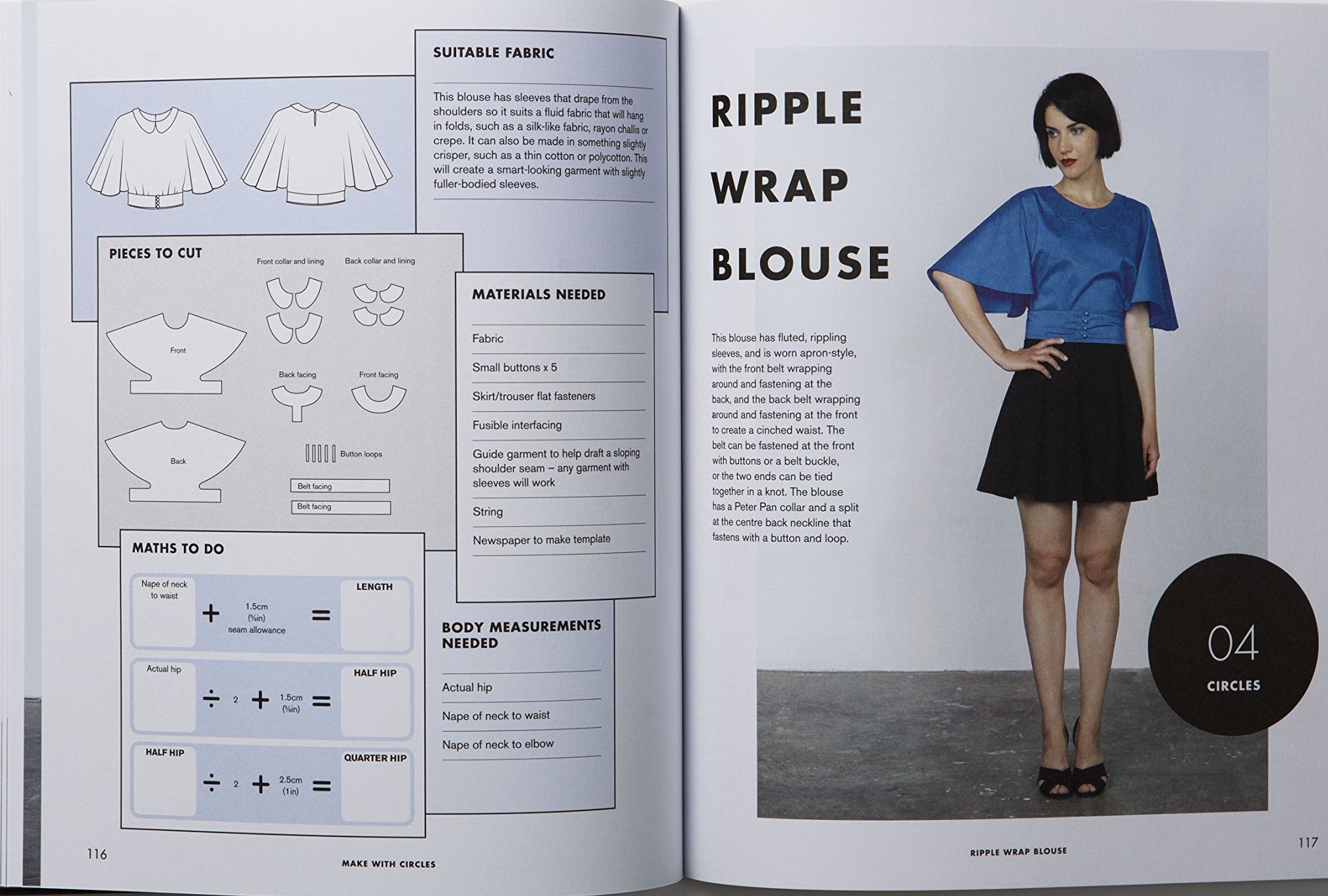
Then comes a section on the actual sewing bits. It starts with the fabric and size guides. The sizing here runs from XS to XXL, or, a range from B33/H35.5 to B47.5/H49.5. There is a list of basic pattern pieces included, then an extensive section of sewing construction guides for the many elements, and how to put them together. Anything not covered in the basic tunic (ie: split sleeve, ruffle collars) is given separate instructions, and there are many things covered, including how to apply trim and mitre it as well. Again, lots of illustrative photos in this part. I think my favourite variation is the ruffle necked, dress length with sleeves, which turns out not to look too much like a 'tunic' by the time it's done ;) In fact, with all the sleeve, neckline, collar, fabric, length and trim options, the projects can look very different from one another, so that you wouldn't even know that someone had started with the same basic pattern plan.

This is followed by a list of resources - sewing shops, classes, and the like - and then the actual traceable pattern pieces. 

There is actually quite a bit of good sewing info in this book, particularly in the section showing how to sew all the different elements. It could encourage readers to mix and match elements in their other sewing as well as when following this book. The colours in the images are bright and cheerful, and the tone is encouraging but not for rank beginners -- those who've been sewing a while will also enjoy it. It's a good example of how to take a basic pattern and add and change it to create a wardrobe of options. Just for that alone I'd recommend taking a look at this older book that is still a lot of fun to explore. 
 

Sunday, September 3, 2023

Weekend Review: How to Sew Clothes


How to Sew Clothes / Amelia Greenhall & Amy Bornman
NY: Abrams, c2023.
208 p.


I picked up this new book recently just to take a look (at Book Outlet, which I have a small addiction to). It has just a few basic style patterns in it, so I wasn't sure it would really do it for me, being pretty starter level. But I was so wrong. This is a great book! 

It has a handful of designs in it -- and you can see the contents fully laid out and explained at the All Well Workshop's website. But it really lives up to its subtitle -- it's full of easy hacks, clearly explained, to extend the potential of a basic pattern. The patterns themselves are on sheets folded in the back of the book, for tracing. There's the famous All Well Box Top, a Cardigan Jacket, and a couple of bags, but from that you can build a pretty good start to a wardrobe. 

I really like the layout and the relaxed tone of the book. The photography and sewing instructions are nicely done, appealing and easy to use. And the authors have an encouraging, casual tone but also give you lots of solid instruction and guidance. 

There's a section of sewing basics, and one on tips for the sewing life -- I haven't seen anything quite like this in other sewing books and it's wonderful. It talks about things like how to use Indie patterns and pdfs, keeping a notebook of projects, tracing existing garments and so on. Very basic, in the sense that there will no confusing jargon for any newbie reader. 

And there is another section at the end with tips on continuing with your sewing journey. It's a series of short tidbits on many different topics, and I loved the first one: Prioritize by Excitement. If you're overwhelmed by project options (and who isn't at some point) they say pick the one you're excited about. Such good advice! There's also bits on ebbs & flows, finding sewing friends, perfectionism and more. And of course I appreciated the shout-out to sewing book sections at the public library! 

I was very impressed with this book as a whole, it feels like one of the gentlest and most approachable beginner books I've seen. It's completely non-intimidating, but still doesn't dumb down the process of learning to sew, and offers encouragement to grow past a pattern and improve your sewing skills. This will be my first choice to offer to beginner sewists in future. I thought it was great. 


Sunday, July 23, 2023

Weekend Review: Everyday Patterns by Lotta Jansdotter

Lotta Jansdotter Everyday patterns / Lotta Jansdotter
NY: Abrams, c2022.
144 p.


I picked this one up because I really enjoyed the first pattern book that Lotta Jansdotter created. This one has similar silhouettes and style, with lots of great photography. A real lifestyle book. 

This one has six garment patterns and a couple of accessories included. The title states that the pieces are mix & match, and they are -- a whole capsule wardrobe if you want it. The patterns are: 

Billie Top & Tunic
Rui Shirt & Shirt Dress
Maar Dress
Pym Pants
Kiko Jacket & Robe
Rickie Skirt 

Stina Everyday Tote Bag
Scarf
Headband 

As usual in her books there are a variety of models from her circle of friends and acquaintances. There are both young and old, male and female, although probably half of the model photos are of Lotta herself. She's really trying to make these patterns appeal to both men and women, but I'm not sure it it carries over fully. The styles are very much in her aesthetic, boxy fits and lots of cotton and linen. If you are a Lotta fan these will appeal to you, although these days I'd say there are many similar patterns out there from tons of indie designers. 

I liked this one for its visuals - great photos, nice cohesion to the wardrobe patterns, great fabric choices. But I can't give the book itself a perfect review because of the massive issues with pattern errors. There is an enormous list of pattern errata at the Abrams website, for nearly every pattern. And if you want to download and print the fixed patterns, they are all only available in copyshop format. So if you want to spend more than the book's price on getting all the patterns that were supposed to be included as traceable in the book itself on reprinting copyshop versions of the patterns, go for it. But I won't be doing that. A skilled sewist might be able to recognize the pattern issues and redraft, but why should someone who has bought this for the patterns have to do that? **ETA: a reader notes in the comments that it is indeed possible to tile these files in Adobe and print them yourself, if you want to try that. 

The patterns seem to mostly have sizing lines labelled incorrectly, with a few of the patterns having fully revised pattern sheets to download. I can't quite tell if that is because of the sizing marking issues, or further issues though, since I have not downloaded the new pattern sheets. 

So this was both beautiful to look at, and inspiring when thinking about simple sewing and a capsule wardrobe. But I feel badly for the author that the technical aspects of the publication lower the value overall. 

Sunday, July 9, 2023

Weekend Review: Your Skirt, Your Way


Your Skirt, Your Way / Jenniffer Taylor
Search Press, c2020.
128 p.


This is another book by a former Great British Sewing Bee contestant. It's the second book by Jenniffer Taylor, whose first book, Girl With a Sewing Machine, was published in 2020 shortly after her GBSB appearance. 

This book is a really interesting one for adventurous beginners, or those more accomplished sewists who want to create their own block to then make into a variety of skirts. There are 10 distinct skirts included in the book for readers to create.

The book starts with an intro, recommending necessary tools and basics, then moves into how to create your block based on your measurements. This section includes how to measure, how to draw out a block and how to create a toile to check fit. 

Then the following sections cover six shapes of skirt, waistbands, facings, zips and buttons, and then a section on pockets, yokes, hems and vents. There is a lot of info for sewists to use here. 

The final 40 pages are the actual skirt "recipes", as she calls them. They are not quite patterns, but the instructions about how to make the pattern based on your block -- and then how to construct them. I think there are many options here, with a style to suit every reader. And the details are cute too - I love the pockets on the flared Kate skirt.


I thought that this book was really well done, at just the right level for an ambitious beginner, straightforward but not overly simple. Skirts are a great starter project, and are also a good way to take a stab at pattern making. There is solid instruction, lots of photos, and some creative yet very wearable projects in this book -- a winner. 


Sunday, July 2, 2023

Weekend Review: Sew Chinelo

Sew Chinelo / Chinelo Bally
Collins & Brown, c2021.
176 p.

I am a big fan of the Great British Sewing Bee, and Chinelo was one of my favourite contestants. I read the first book she put out after her appearance, Freehand Fashion, and so really wanted to check out this one as well. 

Unfortunately, this one wasn't really a book for me. The focus here is partially upcycling (the subtitle references Sustainable Style after all). And I do love upcycling, but the projects in this book don't appeal to me personally. There are lots of wrap dress/skirt, wide off-the-shoulder collars, strapless maxis, and kids clothes. None of those are my style at all. So, while this isn't a book for me, it could definitely be one for other readers. 

Aside from my personal aesthetic, there is a lot to admire about this book. If this kind of refashioning and youthful style is your thing, then you'll love it. It provides a variety of projects, so you could make a whole outfit or two. There are 11 adult projects, and 3 children's. They combine Chinelo's Freehand cutting style with the previously mentioned upcycling projects. And there is quite a good section on techniques - from bias binding tips to seam finishes, zips and hems, there are step-by-step illustrated instructions included. Plus a great section of taking measurements, which includes photographs to make the spots to measure very clear to new sewists. 

The one project that really intrigued me was the maxi dress, but mostly for the bodice. Chinelo uses a pair of men's suit trousers, takes them apart and uses them for the fabric of the bodice, which is a basic sleeveless scoop neck, princess seam bodice. It works quite well & if there was enough fabric to add some cap sleeves this is one I might try myself, although I'd change the skirt. She also finishes the book with a one-shoulder jumpsuit, and while there is no way I'd ever make that, it is finished with a huge floral corsage, in the same suiting fabric, on one shoulder. That was eye-catching and the instructions make it seem really easy -- would love to make one for other uses! 

So, not the best book for my style, but interesting nonetheless, and it might just appeal to you. Worth checking out. 


Sunday, October 30, 2022

Weekend Review: Sewing Love


Sewing Love / Sanae Ishida
Seattle : Sasquatch Books, ©2022
271 p.


This is the second book by Ishida that I've read, via my library. It's a wonderful book! I really enjoyed it and I know I'll be reading it again to soak in all the detail involved. 

It's more than a basic sewing book, and more than just a project book, too. It's a great book for the intermediate sewist, who is looking for more learning and more challenge. The first part of the book deals with block making -- how to create a pattern block based on your own body. 


The second half then goes in to the projects: how to make yourself actual garments using your blocks. The garments are all fairly loose-fit casual clothes, so the adaptations and adjustments you'll have to make to get a decent fit are easier than closely fitted, detailed clothing would be. So it's a good way to start getting comfortable with fitting using your block. If you prefer heavily structured, fitted clothing, you'll likely want to look elsewhere. 

But the tone is very encouraging, and the adventurous beginner might feel up to giving this a go as well. There is a lot of information in this book, but it's nicely organized, non-intimidating, and well illustrated. There are clear illustrations accompanying the block making instructions, and also quite a number of photos of projects on all ages and sizes of sewists. And the book design as a whole is calm and beautiful overall, as well. 


The discussion of the block making hits just the right level; accessible but not overly simplified. There are LOTS of measurements suggested here, more than the usual basics. I can see the influence of some of the books she's put in her bibliography, especially Joi Mahon's range for measurements. She also refers to two of her favourite sewing/pattern books in the text and the bibliography, SEW by Barbara Emodi and How to Make Your Own Dress Patterns by Adele Margolis, which are also faves of mine so I am naturally inclined to like this book as well!

It's a friendly, welcoming book but one that still provides a lot of learning opportunity. You could spend a fair bit of time working your way through the block process and the patterns, and come out on the other side much more confident about your fitting and pattern adjustment skills. Recommended. 

Sunday, August 14, 2022

Weekend Review: Studio Secrets Millinery


Studio Secrets: Millinery / Estelle Ramousse & Fabienne Gambrelle
trans. from the French by Cicero Translations
Tunbridge Wells, UK: Search Press, 2010, c2007.
119 p.


This book is an interesting mix; it features a French milliner, sharing her story and her workshop, as well as a touch of millinery history from France. It even visits the workshop of a 92 yr old milliner who still works out of her home. The second half of the book then shares patterns and instructions for 5 'cut and sewn' hats, 2 that are more complicated and need to be blocked, and some ideas for customizations. 

There are lots of images, particularly for the instructions in the pattern section. This is very helpful if you want to give one a try. There are a variety of styles, from a headband to a cap, beret and wide brimmed hat or even a cloche. They talk about the technique and show each step as well as including a gallery at the end of all the hats being worn on heads. If you have any interest in trying to make a hat, this would be a fun book to check out. 

I enjoyed the French feel of this book as well, particularly in the visit to 92 yr old Madame Galanter's studio -- although this is only two pages she comes across as quite a character. The reliance of hats in general has dropped in our social milieu but the skills are still being practiced by a select few and it was great to read about them here. 

The patterns included are generally wearable ones, and I was pleased that so many styles that can be easily sewn at home are featured. You don't need many specialty items to make them up either, aside from some quality grosgrain or adhesive interfacings. The two that need blocking are definitely for the more advanced amateur as they require more skill and more supplies as well. The only thing that put me off a little was the inclusion of what they called a "Chinese style cap", influenced by the Maoist style. I'm not a fan of taking inspiration from oppressive regimes no matter what purpose. The cap itself is quite nicely made & doesn't look militaristic, and the introduction talks about many different styles of caps, so not sure why they went with this reference.

In any case, overall this was a fun little book with some good patterns and lots of visual inspiration. It was well laid out and would give any aspiring home hatmaker some solid starting points.

Sunday, July 3, 2022

Weekend Review: Cut Up Couture


Cut-Up Couture: Edgy Upcycled Garments to Sew / Koko Yamase
translated from the Japanese by Kyoto Matthews
Loveland, CO: Interweave, 2012,c2009.
88 p.

This is a fun and unusual book. Like the subtitle says, these projects are edgy upcycles, mainly from men's clothing. I enjoyed looking through this book, but these clothes are definitely not my style - I can't see making any of them myself. But younger or edgier sewists would probably love it! 

The book is neatly laid out. There are three sections: Sweatshirts and T-Shirts, Men's (dress) shirts, and Scarves and Neckties. Each section has numerous suggestions for how to reshape and reuse clothing items, and there are a lot of different ideas and techniques, it's not just a repeat of one idea. 

However, many of the projects start with XL menswear to cut up for the tiny Japanese woman. Thus many changes and design adaptations would have to be made if you don't fit into this trajectory. As concepts, though, there are some neat projects in here. 

The skirt on the left upper side of the cover is the same piece as the top on the upper right, for example - it's just how you put it on and button it that changes the look. There are a couple of other convertible pieces included ,which is fun. I felt like the first section, using sweatshirts and tees, was the most successful. The dress shirt items look really messy and suitable only to young people who are experimenting with their look. A couple of the vests made of scarves in the final section were nice and I'd consider them wearable by a wider range of sewists. 

One of my favourite things in the book was a detail in the first project. She took an XL sweatshirt, cut off the sleeves and pleated up the centre front, holding it with a sewn on loop. I liked the folds that resulted, and could see this technique used for a bodice overlay on a fancy dress, for example. 

Although the aesthetic isn't really for me, this is a successful book that does what it says it will. There are lots of large clear images, the instructions for the upcycles have both descriptive steps and sketches to guide readers, and there is a wide variety of options included that readers could then take and use in other ways as well. If you're into upcycling clothing and want some fresh ideas, this might be one you want to take a look at. 

Sunday, April 17, 2022

Weekend Review: Creative Dressing by Kaori O'Connor


Creative Dressing / Kaori O'Connor
Boston, MA: Routledge & Kegan Paul, c1981.
192 p.

This is a book from 1981 that I found at a thrift shop - I don't think it would be published today, due to the items included being on the cultural appropriation spectrum. However, it is an interesting look at what was "designer" influenced in the late 70s, and does give some insight into more traditional items of clothing and the fact that many of them are zero or low waste by design. 

It's made up of about half sewing and half knitting patterns -- I'm only commenting on the sewing ones, as I have no knowledge of knitting so can't judge those ones other than by appearance. The sewing patterns include items like a basic mock-kimono, poncho top and skirt, Balinese trousers, Indochinese jacket, Ottoman Kusak Dressing Gown, Indian shirt dress, fabric shoulder bag, Singapore Pyjamas, Tartar Khalat Coat, Chinese jacket and side slit skirt and Translyvanian Peasant Shirt. 


These are all presented on graphs ready for scaling up - that tells you how straightforward most of the pattern pieces are. Alongside these are copies of 70s chic designer outfits like a sundress, t-shirt dress, or bodysuit (among others) as well as the insertion of a few nightgowns & historical outfits. This book covers it all. 

The styling of these are so 70s and mostly really out of date; the traditional designs are of course timeless but in lovely 70s fabric and photography so you really have to look past that to the style lines. There are a bunch of designs offered by a variety of other designers in addition to the traditional items I was most interested in. But, the sizing is TINY. I think the biggest waist size for skirts & trousers was 28" as far as I could tell. And most of the items are one size, for a bust between 34-38" if they are voluminous at the waist.

If you take this as a visit to the past, it can show you a lot. And the basic outlines of classic patterns were interesting to examine. I was particularly interested in the Peasant Shirt, as the basic shape is similar to a Ukrainian vyshyvanka, which I'd like to make for myself this year. However, other than as a 70s redux I'm not sure that this book is actually all that practical for modern sewists. Also, the wholesale use of designs across multiple cultures is a bit cringe-worthy these days.  Still, I found it weirdly compelling - all that 70s glamour... Rather eye dazzling. This is one to flip through for its retro interest, but not to truly recommend. 

Sunday, April 10, 2022

Weekend Review: No Patterns Needed


No Patterns Needed: DIY Couture from Simple Shapes / Rosie Martin
London: Laurence King, c2016.
208 p.

This is a title that wasn't quite what I'd expected. It is full of patterns that you make yourself using your body measurements and some starter shapes - rectangles, circles, triangles. For a book that says it's for you if you don't want to work with complicated ready-made patterns, I found that making your own in this way can be even more complicated! 

There are a variety of designs in the book in each section, starting with the easiest (rectangles) and going  on to have a chapter on circles and then  triangles. Personally I only found 2 of the designs at all appealing; they are quite simple and remind me of the kind of DIY aesthetic of younger people who are interested in cutting up t-shirts and refashioning and things like that. So if you have a newer, young sewists in your life, they might find this one of interest.

I like this one

Anyhow, the sections are well designed. Each has extensive instructions and diagrams for each design, and then photos of the finished project on a couple of different models. The photos are large so you can really see the outfit, but are not super slick, perhaps to fit in with the DIY vibe of the book. All the models are young, and most are pretty thin. 

I think this is a bit of a "low waste" style of cutting for most of the designs, since they start with basic shapes like rectangles. But then there are bodice pieces with curves and so on, so unless you can nest those the low waste effect is reduced. 

Not a bad book, but not my style particularly. So I won't be adding to my own collection, but I can see that a more experimental and/or freestyle kind of sewist might really enjoy it. 


Sunday, March 13, 2022

Weekend Review: Make It Simple


Make It Simple / Tilly Walnes
London: Quadrille, c2020
207 p.

Another pattern book this weekend, this is one I've been wanting to get a look at for a while. Tilly Walnes, of the well-known company Tilly and the Buttons, has written a few books - this is the third. I like a quick sewing project with simple construction, so was quite interested to see what this book suggested. 

There are 6 patterns included, each with a couple of variations. There are also a couple of small projects like an eye mask included. Pattern sheets are in the back of the book for tracing; I traced off the Suki dress, but it was a little tricky since by necessity a lot of the patterns overlap. Not quite as tricky as a Burda magazine, but the pattern lines could be improved by using different colours for each pattern's lines. The patterns are: 

  • Safiya Trousers
  • Tabitha T-shirt
  • Suki Dress 
  • Bertha Cardigan 
  • Juno Pyjamas
  • Olive Pinafore


The sizing runs from 1-10, which translates into a 30"B/33"H to a 48"B/51"H. And the models in the book are of varied sizes as well, which shows the patterns on different bodies. 

The book also includes sections on sewing basics, plus tips for "shortcuts" to speed up your sewing. The patterns are pretty straightforward and aimed at being quick makes. This does mean that they are all a bit bland, without any extra details, but you can always use a simple pattern to highlight a great fabric, or add some details on your own. 

There are sections between the project chapters that suggest quick projects you can make between bigger projects, ways to maximize your sewing time, how to recognize what makes a quick project and so on. And each project has a quick list of 'shortcut steps' to speed up construction as well.

Overall it's a solid book, but not for rank beginners -- they might do better to start out with Tilly's first book, Love At First Stitch, just because the projects are thoroughly explained step by step, assuming no knowledge at all in that one. This book is fairly simple but does assume some familiarity with sewing. 
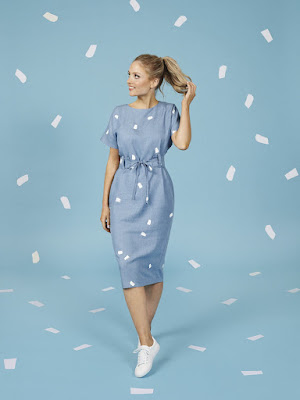
I was personally most interested in the Suki dress and the Olive Pinafore; I traced the dress but haven't tried it quite yet. We'll see how it goes!